


How AI & ML is Used in Education — With Real World Examples


About Us
We are MySkill Academy, a leading education and technology training center. Our mission is to provide high-quality education and training in the latest technologies, including Artificial Intelligence (AI) and Machine Learning (ML). With over 20 years of experience, we have trained thousands of students who are now excelling in their respective fields.
Introduction
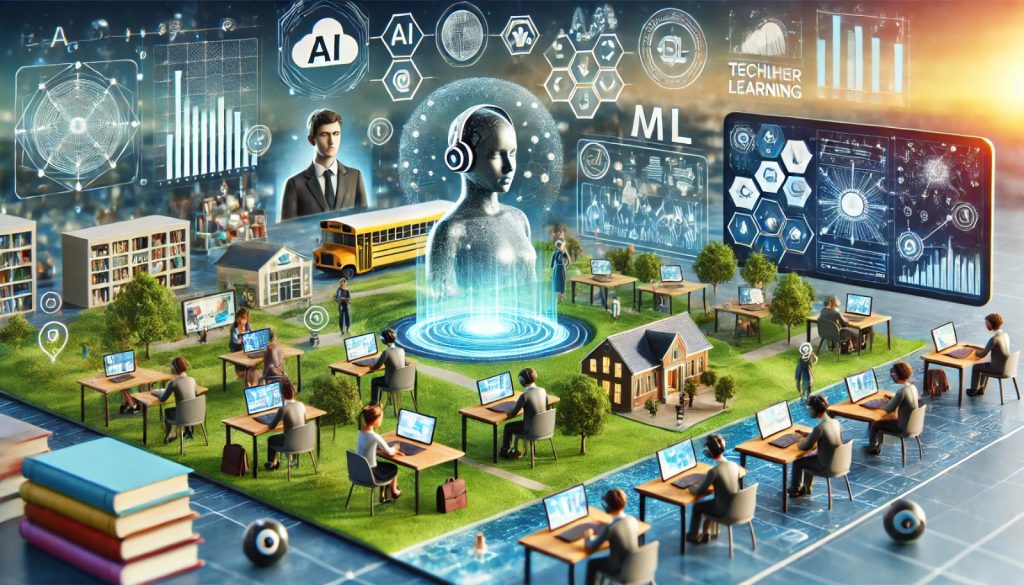
Artificial Intelligence (AI) and Machine Learning (ML) are transforming various sectors, and education is no exception. These technologies are being integrated into educational systems to enhance learning experiences, streamline administrative tasks, and provide personalized education. This article explores the current applications of AI and ML in education, real-world examples, and a glimpse into the future of these technologies in the educational landscape.
Personalized Learning
AI and ML enable personalized learning experiences by analyzing student data and adjusting educational content to meet individual needs. This approach helps in identifying strengths and weaknesses, allowing for tailored lesson plans. Real-world examples include platforms like DreamBox and Knewton, which use adaptive learning technologies to personalize math and reading instruction.
Automating Administrative Tasks
Administrative tasks can be time-consuming for educators. AI and ML can automate processes such as grading, scheduling, and attendance tracking, allowing teachers to focus more on teaching. Tools like GradeScope and ExamSoft automate grading and provide detailed analytics on student performance.
Smart Content
Smart content refers to AI-generated educational materials that enhance learning. This includes digital textbooks, interactive simulations, and personalized practice tests. Companies like Content Technologies and Netex Learning are creating AI-driven content that adapts to the learner’s pace and style.
Virtual Tutors
AI-powered virtual tutors provide additional support to students outside the classroom. These tutors can answer questions, provide explanations, and guide students through difficult concepts. Examples include IBM’s Watson Tutor and Carnegie Learning’s MATHia, which offer personalized tutoring experiences.
Predictive Analytics
Predictive analytics in education uses AI and ML to analyze student data and predict future performance. This helps educators identify at-risk students and intervene early. Platforms like BrightBytes and Starfish provide insights into student behavior and academic progress, helping to improve retention rates.
Enhanced Student Engagement
AI and ML technologies are used to create engaging learning experiences through gamification, interactive content, and virtual reality. Tools like Classcraft and Nearpod use gamification to motivate students, while platforms like zSpace offer immersive virtual reality experiences that enhance learning.
Inclusive Education
AI and ML help create inclusive learning environments by providing support for students with diverse needs. Technologies such as text-to-speech, speech-to-text, and translation services ensure that all students have access to learning materials. Apps like Microsoft Translator and Voiceitt assist students with language barriers and speech impairments.
Teacher Support
AI and ML provide valuable support to teachers by offering professional development resources, lesson planning assistance, and classroom management tools. Platforms like TeachFX and Edthena use AI to provide feedback on teaching practices, helping educators improve their skills and effectiveness.
Future Trends in AI & ML in Education
The future of AI and ML in education holds exciting possibilities. Emerging trends include the development of intelligent tutoring systems, AI-driven career guidance, and the integration of AI in curriculum design. As these technologies continue to evolve, they will play an increasingly significant role in shaping the future of education.
Frequently Asked Questions
How does AI personalize learning?
AI personalizes learning by analyzing student data and adapting educational content to meet individual needs. It helps in creating customized lesson plans, identifying strengths and weaknesses, and providing targeted support.
What are some real-world examples of AI in education?
Real-world examples of AI in education include adaptive learning platforms like DreamBox, automated grading tools like GradeScope, and virtual tutors like IBM’s Watson Tutor. These tools enhance learning experiences and streamline administrative tasks.
How does AI automate administrative tasks in education?
AI automates administrative tasks by using algorithms to handle processes such as grading, scheduling, and attendance tracking. This allows educators to focus more on teaching and less on paperwork.
What is smart content in education?
Smart content refers to AI-generated educational materials that adapt to the learner’s pace and style. This includes digital textbooks, interactive simulations, and personalized practice tests that enhance learning experiences.
How do virtual tutors work?
Virtual tutors use AI to provide personalized support to students outside the classroom. They can answer questions, provide explanations, and guide students through difficult concepts, offering a customized tutoring experience.
What is predictive analytics in education?
Predictive analytics in education uses AI to analyze student data and predict future performance. It helps educators identify at-risk students and intervene early to improve retention rates and academic outcomes.
How does AI support inclusive education?
AI supports inclusive education by providing tools such as text-to-speech, speech-to-text, and translation services. These technologies ensure that all students, regardless of their needs, have access to learning materials and can participate fully in their education.