



1. Monocot leaves possess(a) intercalary meristem
(b) lateral meristem
(c) apical meristem
(d) mass meristem
2. Commercial cork is obtained from(a) Berberis/Barberry
(b) Salix/Willow
(c) Quercus/Oak
(d) Betula/Birch
3. A leaf primordium grows into the adult leaf lamina by means of
(a) apical meristem
(b) lateral meristem
(c) marginal meristems
(d) at first by apical meristem and later largely by marginal meristems.
4. The cells of the quiescent centre are characterised by
(a) dividing regularly to add to tunica
(b) having dense cytoplasm and prominent nuclei
(c) having light cytoplasm and small nuclei
(d) dividing regularly to add to the corpus
5. The length of different internodes in a culm of sugarcane is variable because of (a) shoot apical meristem
(b) position of axillary buds
(c) size of leaf lamina at the node below each internode
(d) intercalary meristem
6. In land plants, the guard cells differ from other epidermal cells in having:
(a) cytoskeleton
(b) mitochondria
(c) endoplasmic reticulum
(d) chloroplasts
7. As compared to a dicot root, a monocot root has
(a) many xylem bundles.
(b) relatively thicker periderm.
(c) inconspicuous annual rings.
(d)more abundant secondary xylem.
8. Organisation of stem apex into corpus
and tunica is determined mainly by
(a) planes of cell division
(b) regions of meristematic activity
(c) rate of cell growth
(d) rate of shoot tip growth
9. Collenchyma occurs in the stem and
petioles of (a) Xerophytes
(b) Monocots
(c) Dicot herbs
(d) Hydrophytes
10. Which is correct about transport or
conduction of substances?
(a) Organic food moves up through phloem
(b) Organic food moves up through phloem
(c) Inorganic food moves upwardly and
downwardly through xylem
(d) Organic food moves upwardly and
downwardly through phloem
11. Which of the following meristems is
responsible for extrastelar secondary
growth in dicotyledonous stem? (a) Intrafascicularcambium
(b) Interfascicular cambium
(c) Intercalary meristem
(d) Phellogen
12. Chlorenchyma is known to develop in the
(a) pollen tube of Pinus
(b) cytoplasm of Chlorella
(c) mycelium of a green mould such as Aspergillus
(d) spore capsule of a moss
13. Anatomically fairly old dicotyledonous root is distinguished from the dicotyledonous stem by
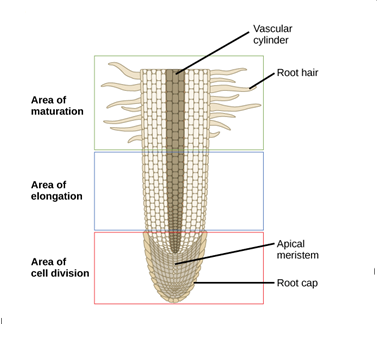
(a) absence of secondary phloem
(b) presence of cortex
(c) position of protoxylem
(d) absence of secondary xylem
14. Which one of the following is wrongly matched?
(a) Root pressure – Guttation
(b) Puccinia – Smut
(c) Root – Exarch protoxylem
(d) Cassia – Imbricate aestivation
15. Lenticels are involved in: (a) Gaseous exchange
(b) Food transport
(c) Photosynthesis
(d) Transpiration
16. Sieve tubes are suited for translocation of food because they possess
(a) bordered pits
(b) no ends walls
(c) broader lumen and perforated cross walls
(d) no protoplasm
17. Collenchyma occurs in
(a) herbaceous climbers
(b) woody climbers
(c) climbing stems
(d) water plants
18. A bicollateral vascular bundle is characterised by
(a) Phloem being sandwitched between xylem
(b) Transverse splitting of vascular bundle
(c) Longitudinal splitting of vascular bundle
(d) Xylem being sandwitched between phloem
19. At maturity which of the following is enucleate?
(a) Sieve cell
(b) Companion cell
(c) Palisade cell
(d) Cortical cell
20. The apical meristem of the root is present
(a) in all the roots
(b) only in radicals
(c) only in tap roots
(d) only in adventitious roots
21. Which one of the following is resistant to enzyme action?
(a) Cork
(b) Wood fibre
(c) Pollen exine
(d) Leaf cuticle
22. The cork cambium, cork and secondary cortex are collectively called:
(a) phelloderm
(b) phellogen
(c) periderm
(d) phellem
23. Age of a tree can be estimated by:(a) biomass
(b) number of annual rings
(c) diameter of its heartwood
(d) its height and girth
24. Death of protoplasm is a pre-requisite for a vital function like
(a) transport of sap
(b) transport of food
(c) absorption of water
(d) gaseous exchange
25. Pericycle of roots produces
(a) mechanical support
(b) lateral roots
(c) vascular bundles
(d) adventitious buds
26. Abnormal/anomalous secondary growth occurs in
(a) Dracaena
(b) Ginger
(c) Wheat
(d) Sunflower
27. What happens during vascularization in plants?
(a) Differentiation of procambium is immediately followed by the development of secondary xylem and phloem
(b) Differentiation of procambium followed by the development of xylem and phloem
(c) Differentiation of procambium, xylem and phloem is simultaneous
(d) Differentiation of procambium followed by the development of primary phloem and then by primary xylem
28. The most abundant element present in the plants is
(a) Carbon
(b) Nitrogen
(c) Manganese
(d) Iron
29. Palisade parenchyma is absent in leaves of:
(a) mustard
(b) soybean
(c) gram
(d) sorghum
30. Function of companion cells is
(a) providing energy to sieve elements for active transport
(b) providing water to phloem
(c) loading of sucrose into sieve elements by passive transport
(d) loading of sucrose into sieve elements
31. Some vascular bundles are described as open because these
(a) are surrounded by pericycle but not endodermis
(b) are capable of producing secondary xylem and phloem
(c) possess conjunctive tissue between xylem and phloem
(d) are not surrounded by pericycle
32. Which of the following statements is not true for stomatal apparatus?
(a) Inner walls of guard cells are thick
(b) Guard cells invariably possess chloroplasts and mitochondria
(c) Guard cells are always surrounded by subsidiary cells
(d) Stomata are involved in gaseous exchange
33. Cork cambium and vascular cambium are
(a) parts of secondary xylem and phloem
(b) parts of pericycle
(c) lateral meristems
(d) apical meristems
34. For union between stock and scion in grafting which one is the first to occur?
(a) Formation of callus
(b) Production of plasmodesmata
(c) Differentiation of new vascular tissues
(d) Regeneration of cortex and epidermis
35. Which exposed wood will decay faster
(a) Sapwood
(b) Softwood
(c) Wood with lot of fibres
(d) Heartwood
36. Loading of pholem is related to
(a) increases of sugar in phloem
(b) elongation of phloem cell
(c) separation of phloem parenchyma
(d) strengthening of phloem fibre
37. Ectophloicsiphonostele is found in
(a) Osmunda and Equisetum
(b) Marsilea and Botrychium
(c) Adiantum and Cucurbitaceae
(d) Dicksonia and Maidenhair fern
38. In barley stem vascular bundles are:
(a) closed and scattered
(b) open and in a ring
(c) closed and radial
(d) open and scattered
39. In Kranz anatomy, the bundle sheath cells have
(a) thin walls, many intercellular spaces and no chloroplasts
(b) thick walls, no intercellular spaces and large number of chloroplasts
(c) thin walls, no intercellular spaces and several chloroplasts
(d) thick walls, many intercellular spaces and few chloroplasts
40. Meristematic tissue responsible for increase in girth of tree trunk is
(a) Apical meristem
(b) Intercalary meristem
(c) Lateral meristem
(d) Phellogen
41. What is true about a monocot leaf
(a) Reticulate venation
(b) Absence of bulliform
(c) Mesophyll not differentiated into palisade and spongy tissues
(d) Well differentiated mesophyll
42. A narrow layer of thin walled cells found between phloem/bark and wood of a dicot is
(a) Cork cambium
(b) Vascular cambium
(c) Endodermis
(d) Pericycle
43. Main function of lenticel is
(a) transpiration
(b) guttation
(c) gaseous exchange
(d) bleeding
44. For a critical study of secondary growth in plants. Which one of the following pairs is suitable?
(a) teak and pine
(b) deodar and fern
(c) wheat and maiden hair fern
(d) sugarcane and sunflower.
45. Heartwood differs from sapwood in:
(a) presence of rays and fibres
(b) absence of vessels and parenchyma
(c) having dead and non -conducting elements
(d) being susceptible to pests and pathogens
46. Closed vascular bundles lack
(a) Ground tissue
(b) conjunctive tissue
(c) Cambium
(d) Pith
47. Water containing cavities in vascular bundles are found in:
(a) Sunflower
(b) Maize
(c) Cycas
(d) Pinus
48. Which one yields fibres?
(a) Coconut
(b) Oak
(c) Teak
(d) Sisso
49. Vascular cambium produces
(a) primary xylem and primary phloem
(b) secondary xylem and secondary phloem
(c) primary xylem and secondary phloem
(d) secondary xylem and primary phloem
50. Where do the casparian bands occur?
(a) Epidermis
(b) Endodermis
(c) Pericycle
(d) Phloem
51. Angular collenchyma occurs in
(a) Cucurbita
(b) Helianthus
(c) Althaea
(d) Salvia
52. An organised and differentiated cellular structure having cytoplasm but no nucleus is
(a) Vessels
(b) Xylem parenchyma
(c) Sieve tubes
(d) Tracheids
53. Bordered pits are found in
(a) Sieve cells
(b) Vessel wall
(c) Companion cells
(d) Sieve tube wall
54. Periderm is produced by
(a) Vascular cambium
(b) Fascicular cambium
(c) Phellogen
(d) Intrafascicular cambium
55. Procambium forms
(a) only primary vascular bundles
(b) only vascular cambium
(c) only cork cambium
(d) primary vascular bundles and vascular cambium
56. As the secondary growth takes place (proceeds) in a tree, thickness of
(a) heart wood increases
(b) sap-wood increases
(c) both increase
(d) both remain the same
57. What is not true about sclereids?
(a) These are parenchyma cells with thickened lignified walls
(b) These are elongated and flexible with tapered ends
(c) These are commonly found in the shells of nuts and in the pulp of guava, pear, etc
(d) These are also called the stone cells made up from sclereid.
58. Transition of radial vascular bundle in root to conjoint vascular bundle in stem occurs in which zone?
(a) Epicotyl
(b) Hypocotyl
(c) Meristem
(d) At base of stem
59. Vessels are found in
(a) all angiosperms and some gymnosperms
(b) most of angiosperms and few gymnosperms
(a) all angiosperms, all gymnosperms and some pteriodophyta
(d) all pteridophyta
60. Four radial vascular bundles are found in
(a) dicot root
(b) monocot root
(c) dicot stem
(d) monocot stem
61. Axillary bud and terminal bud are derived from the activity of
(a) lateral meristem
(b) intercalary meristem
(c) apical meristem
(d) parenchyma
62. Which of the following statements is true?
(a) Vessels are multicellular with narrow lumen
(b) Tracheids are multicellular with narrow lumen
(c) Vessels are unicellular with wide lumen
(d) Tracheids are unicellular with wide lumen
63. In a longitudinal section of a root, starting from the tip upward, the four zones occur in the following order:
(a) Root cap, cell division, cell enlargement, cell maturation
(b) Root cap, cell division, cell maturation, cell enlargement
(c) Cell division, cell enlargement, cell maturation, root cap
(d) Cell division, cell maturation, cell enlargement, root cap
64. In a woody dicotyledonous tree, which of the following parts will mainly consist of primary tissues?
(a) All parts
(b) Stem and root
(c) Flowers, fruits and leaves
(d) Shoot tips and root tips
65. A common structural feature of vessel elements and sieve tube elements are
(a) pores on lateral walls
(b) presence of p-protein
(c) enucleate condition
(d) thick secondary walls
66. Passage cells are thin walled cells found in
(a) phloem elements that serve as entry points for substance for transport ot other plant parts
(b) testa of seeds to enable emergence of growing embryonic axis during seed germination
(c) central region of style through which the pollen tube grows towards the ovary
(d) endodermis of roots facilitating rapid transport of water from cortex to pericycle.
67. Vascular tissues in flowering plants develop from:
(a) phellogen
(b) plerome
(c) periblem
(d) dermatogen
68. The annular and spirally thickened conducting elements generally develop in the protoxylem when the root or stem is:
(a) elongating
(b) widening
(c) differentiating
(d) maturing
69. Reduction in vascular tissue, mechanical tissue and cuticle is characteristic of:
(a) mesophytes
(b) epiphytes
(c) hydrophytes
(d) xerophytes
70. The chief water conducting elements of xylem in gymnosperms are:
(a) vessels
(b) fibres
(c) transfusion tissue
(d) tracheids
71. Which one of the following is not a lateral meristem?
(a) Intrafascicular cambium
(b) Interfascicular cambium
(c) Phellogen
(d) Intercalary meristem
72. Ground tissue includes
(a) all tissues external to endodermis
(b) all tissues except epidermis and vascular bundles
(c) epidermis and cortex
(d) all tissues internal to endodermis
73. The common bottle cork is a product of:
(a) Dermatogen
(b) Phellogen
(c) Xylem
(d) Vascular Cambium
74. Companion cells are closely associated with:
(a) Sieve elements
(b) Vessel elements
(c) Trichomes
(d) Guard cells
75. Gymnosperms are also called soft wood spermatophytes because they lack:(a) Cambium
(b) Phloem fibres
(c) Thick-walled tracheids
(d) Xylem fibres
76. Interfascicular cambium develops from the cells of:
(a) Xylem parenchyma
(b) Endomermis
(c) Pericycle
(d) Medullary rays
77. Tunica corpus theory is connected with
(a) root apex
(b) root cap
(c) shoot apex
(d) secondary growth
78. Which meristem helps in increasing girth?
(a) Lateral meristem
(b) Intercalary meristem
(c) Primary meristem
(d) Apical meristem
79. Cork is formed from
(a) cork cambium (phellogen)
(b) vascular cambium
(c) phloem
(d) xylem
80. Pith and cortex do not differentiate in
(a) monocot stem
(b) dicot stem
(c) monocot root
(d) dicot root
81. Which is the correct fact about diffuse or ring porous wood?
(a) Ring porous wood, carries more water for short period
(b) Diffuse porous wood carries more water
(c) Ring porous wood carries more water when need is higher
(d) Diffuse porous wood is less specialised but conducts water rapidly throughout
82. A narrow layer of thin walled cells found between phloem/bark and wood of a dicot is
(a) cork cambium
(b) vascular cambium
(c) endodermis
(d) pericycle
83. Root hair develop from the region of
(a)root cap
(b) elongation
(c) meristematic activity
(d) maturation.
84. Contractile tissues have the following features
(i) Mesodermal in origin
(ii) They contain stretch receptors.
(iii) Rhythmic contractions are seen in them
(iv) They do not fatigue during the life of the animal
Which of the above are characteristics of sphincters?
(a) All the four
(b) Only (i), (ii) and (iii)
(c) Only (i), (ii) and (iv)
(d) Only (i), (iii) and (iv)
85.What happens in plants during vascularisation?
(a) Differentiation of procambium, formation of primary phloem followed by formation of primary xylem
(b) Differentiation of procambium followed by the formation of primary phloem and xylem simultaneously
(c) Formation of procambium, primary phloem and xylem simultaneously
(d) Differentiation of procambium followed by the formation of secondary xylem
86. Which of the following statement(s) is/are true?
(A) Uneven thickening of cell wall is characteristic of sclerenchyma
(B) Periblem forms cortex of the stem and the root
(C) Tracheids are the chief water transporting elements in gymnosperms.
(D) Companion cell is devoid of nucleus at maturity.
(E) The Commercial cork is obtained from Quercus suber.
(a) A and D only
(b) B and E only
(c) B, C and E only
(d) C and D only
87. land plants, the guard cells differ from other epidermal cells in having
(a) Mitochondria
(b) Endoplasmic reticulum
(c) Chloroplasts
(d) Cytoskeleton
88. Specialised epidermal cells surrounding the guard cells are called
(a)bulliform cells
(b) subsidiary cells.
(c) complementary cells
(d) lenticels
89. You are given a fairly old piece of dicot stem and a dicot root. Which of the following anatomical structures will you use to distinguish between the two?
(a)Secondary xylem
(b) Protoxylem
(c) Secondary phloem
(d) Cortical cells
90. The cork cambium, cork and secondary cortex are collectively called
(a) phellogen
(b) Periderm
(c) phellem
(d) phelloderm
91. As a tree grows older, which of the following increases more rapidly in thickness?
(a) Heart wood
(b) Sap wood
(c) Phloem
(d) Cortex
92. For a critical study of secondary growth in plants, which one of the following pairs is suitable?
(a) Teak and pine
(b) Deodar and fern
(c) Wheat and maiden hair fern
(d) Sugarcane and sunflower
93.In which one of the following is nitrogen not a constituent ?
(a) Idioblast
(b) Bacteriochlorophyll
(c) Invertase
(d) Pepsin
94. Sclerenchyma usually_______ and ________ protoplasts.
(a) live, without
(b) live, with
(c) dead, with
(d) dead, without
95.Which of the following does not have stomata?
(a) Hydrophytes
(b) Mesophytes
(c) Xerophytes
(d) Submerged hydrophytes
96. Casparian strip occurs in a
(a) exodermis
(b) pericycle
(c) endodermis
(d) epidermis
97.In a dicotyledonous stem, the sequence of tissues from the outside to the inside is
(a) phellem-pericycle-endodermis-phloem
(b) phellem-phloem-endodermis-pericycle
(c) phellem-endodermis-pericycle-phloem
(d) pericycle-phellem-endodermis-phloem
98. Which of the following is not true about sclereids’?
(a) These are groups of living cells.
(b) These are found in nut shells, guava pulp, pear.
(c) These are also called stone cells.
(d) These are form of sclerenchyma with fibres
99.Which one of the following statements pertaining to plant structure is correct?
(a) Cork lacks stomata but lenticels carry out transpiration.
(b) Passage cells help in transfer of food from cortex to phloem.
(c) Sieve tube elements possess cytoplasm but no nuclei.
(d) The shoot apical meristem has a quiescent centre.
100.The aleurone layer in maize grain is specially rich in
(a) proteins
(b) starch
(c) lipids
(d) auxins.
101.Collenchyma occurs in the stem and petioles of
(a) hydrophytes.
(b) monocots
(c) xerophytes
(d) dicot herbs
102. The vascular cambium normally gives rise to :
(a) Primary phloem
(b) Secondary xylem
(c) Periderm
(d) Phelloderm
103. Root hairs develop from the region of :
(a) Elongation
(b) root cap
(c) Meristematic activity
(d) Maturation
104. Which of the following is made up of dead cells?
(a) Collenchyma
(b) Phellem
(c) Phloem
(d) Xylem parenchyma
105. Identify the wrong statement in context of heartwood:
(a) It is highly durable
(b) It conducts water and minerals efficiently
(c) It comprises dead elements with highly lignified walls
(d) Organic compounds are deposited in it
106. Stomata in grass leaf are
(a) Dumb-bell shaped
(b) Kidney shaped
(c) Barrel shaped
(d) Rectangular
107. Plants having little or no secondary growth are
(a) Grasses
(b) Deciduous angiosperms
(c) Cycads
(d) Conifers
108. Casparian strips occur in
(a) Epidermis
(b) Pericycle
(c) Endodermis
(d) Cortex
109. Secondary xylem and phloem in dicot stem are produced by
(a) Apical meristems
(b) Vascular cambium
(c) Axillary meristems
(d) Phellogen
110. Grass leaves curl inwards during very dry weather. Select the most appropriate reason from the following :
(a) Closure of stomata
(b) Flaccidity of bulliform cells
(c) Shrinkage of air spaces in spongy mesophyll
(d) Tyloses in vessels
111. Which of the statements given below is not true about formation of Annual Rings in trees?
(a) Annual ring is a combination of spring wood and autumn wood produced in a year
(b) Differential activity of cambium causes light and dark bands of tissue early and late wood respectively.
(c) Activity of cambium depends upon variation in climate.
(d) Annual rings are not prominent in trees of temperate region.
112. Phloem in gymnosperms lacks :
(a) Albuminous cells and sieve cells
(b) Sieve tubes only
(c) Companion cells only
(d) Both sieve tubes and companion cells
113. The transverse section of a plant shows following anatomical features :
(a) Large number of scattered vascular bundles surrounded by bundle sheath
(b) Large conspicuous parenchymatous ground tissue
(c) Vascular bundles conjoint and closed
(d) Phloem parenchyma absent
Identify the category of plant and its part :
(1) Dicotyledonous stem
(2) Dicotyledonous root
(3) Monocotyledonous stem
(4) Monocotyledonous root
114. Identify the incorrect statement.
(a) Sapwood is the innermost secondary xylem and is lighter in colour
(b) Due to deposition of tannins, resins, oils etc., heart wood is dark in colour
(c) Heart wood does not conduct water but gives mechanical support
(d) Sapwood is involved in conduction of water and minerals from root to leaf
115. Match List-I with List-II
| List I | List II |
|---|---|
| (a) Cells with active cell division capacity | (i)Vascular tissues |
| (b) Tissues having cell similar in structure and function | (ii)Meristematic tisses |
| (c) Tissues having different types of cells | (iii) Sclerosis |
| (d) Dead cells with highly thickened walls and narrow lumen | (iv) Simple tissues |
Select the correct answer from the options given below.
(a) (b) (c) (d)
(1) (iii) (ii) (iv) (i)
(2) (ii) (iv) (i) (iii)
(3) (iv) (iii) (ii) (i)
(4) (i) (ii) (iii) (iv)
116. Match List-I with List-II.
| List 1 | List 2 |
|---|---|
| (a) Lenticels | (i) Phellogen |
| (b) Cork cambium | (ii) Suberin deposition |
| (c) Secondary cortex | (iv) Exchange of gases |
| (d) Cork | (v) Phelloderm |
Choose the correct answer from the options given below.
(a) (b) (c) (d)
(1) (iv) (ii) (i) (iii)
(2) (iv) (i) (iii) (ii)
(3) (iii) (i) (iv) (ii)
(4) (ii) (iii) (iv) (i)
117. Diadelphous stamens are found in
(1) China rose and citrus
(2) China rose
(3) Citrus
(4) Pea
118. Which of the following is an incorrect statement?
(a) Nuclear pores act as passages for proteins and RNA molecules in both directions between nucleus and cytoplasm
(b) Mature sieve tube elements possess a conspicuous nucleus and usual cytoplasmic organelles
(c) Microbodies are present both in plant and animal cells
(d) The perinuclear space forms a barrier between the materials present inside the nucleus and that of the cytoplasm
119. Select the correct pair.
(a) Loose parenchyma cells rupturing the epidermis and forming a lens shaped opening in bark
– Spongy parenchyma
(2) Large colorless empty cells in the epidermis of grass leaves
– Subsidiary cells
(3) In dicot leaves, vascular bundles are surrounded by large thick-walled cells
– Conjunctive tissue
(4) Cells of medullary rays that form part of cambial ring
– Interfascicular cambium
120. In a cross between a male and female, both heterozygous for sickle cell anaemia gene, what percentage of the progeny will be diseased?
(a) 100%
(b) 50%
(c) 75%
(d) 25%
Solutions :
1.Solution: (a)
Intercalary meristems are derived from apical meristems and separated from the same by permanent cells. They are responsible for localised growth.
2. Solution: (c)
Quercussuber (Cork oak or Bottle cork) possess cork cells. Cork cells are dead, suberized and impervious to water and air, compactly arranged with no intercellular spaces.
3.Solution: (d)
A leaf primordium grows into the adult leaf lamina by means of first by apical meristem and later by marginal meristems.
4.Solution: (c)
The cells of queiscent centre have lower concentration of DNA, RNA and protein as compared to other cells in the root apex. These cells do not divide, hence cytoplasm is light and nuclei are small in them. This concept is based upon quiescent centre theory proposed by Clowes (1961).
5. Solution: (d)
The length of different internodes in a culm of sugarcane is variable because of intercalary meristem. Intercalary meristem is not a part of apical meristem, occurs in the internodes of grasses (sugarcane) between leaf nodes and enables longitudinal growth of the stem.
6Solution: (d)
Guard cells differ from epidermal cells in having chloroplast. The cell wall of guard cells are not uniform, inner walls are thicker than the outer walls, epidermal cells are uniformly thin.
7.Solution: (a)
The vascular bundles are arranged in a loose circle inside the endodermis of a monocot root. In a monocot root, more than six vascular bundles are present. It shows polyarch condition.
8.Solution: (a)
Cells of tunica divide anticlinally to form the outer layer, cells of corpus undergo division in different planes.
9.Solution: (c)
Collenchyma provides mechanical strength to young dicot stems, petioles and leaves.
10.Solution: (d)
Sieve tubes are long distance channels for transport of organic nutrients. The movement of the nutrients are bidirectional.
11. Solution: (d)
Intrafascicular cambium occurs inside the vascular bundles in between xylem and phloem. Interfascicular cambium develops in the form of strips at the level of intrafascicular cambium of vascular bundles. Intercalary meristem lie in between areas of permanent tissues.
12.Solution: (d)
Chlorenchyma cells are those parenchymatous cell which contain chloroplast in them. They are capable of photosynthesis. A spore capsule of moss can perform photosynthesis, therefore chlorenchyma are present in them.
13.Solution: (c)
Anatomically fairly old dicotyledonous root is distinguished from the dicotyledonous stem by position of protoxylem. In dicot root the protoxylem is located near the periphery of the vascular cylinder while in dicot stem the protoxylem is located near the centre of vascular bundle i.e. the xylem is endarch.
14.Solution: (b)
Smut is a disease of cereals, corn, grasses and sorghum caused by many species of fungi.
15.Solution: (a)
Lenticels are lens shaped openings occurs in stems of most of the woody trees. It permits the exchange of gases between the outer atmosphere and the internal tissue of the stem.
16.Solution: (c)
Sieve tubes are elongated tubular conducting channels of phloem. The end walls possess many small pores and have thin cellulosic wall. The lumen is broad in nature.
17.Solution: (c)
Collenchyma is abundant in climbing stems providing mechanical strength.
18.Solution: (d)
Bicollateral vascular bundles have phloem in both outer and inner side of xylem. These type of bundles occur in cucurbitaceae.
19.Solution: (a)
At maturity all physiological functions of sieve tube takes place in companion cell, since the sieve tube elements lose their nucleus at maturity.
20.Solution: (a)
The apical meristem of the root is present at all the root tips. Apical meristem is subterminal in position of the growing root tips and responsible for terminal growth of the root of plants.
21.Solution: (c)
Pollen exine is resistant to enzyme action. The hard outer layer called the exine is made up of sporopollenin which is one of the most resistant organic material known. It can withstand high temperatures and strong acids and alkali. No enzymes that degrades sporopollenin is so far known.
22.Solution: (c)
Phellem, phellogen and phelloderm are collectively called periderm.
23Solution: (b)
Age of a tree can be estimated by number of annual rings. Annual ring constitute alternate concentric rings of spring wood and autumn wood.
24.Solution: (a)
Xylem performs the function of transport of water or sap inside the plant and it is a dead tissue i.e. devoid of protoplasm.
25. Solution: (b)
Pericycle in roots is active in the formation of root branches or lateral roots.
26Solution: (a)
Abnormal secondary growth occurs in some arborescent monocots (eg.: Dracaena, Yucca)
27.Solution: (b)
Vascularization of plant means the development of vascular bundle in the plant, which develops from the cambium.
28.Solution: (a)
Manganese and Iron are micronutrients required in trace amounts. Concentration of nitrogen in dry matter-15000 mg./ gm. Concentration of carbon in dry matter is 45,000 mg/ gm.
29. Solution: (d)
Palisade parenchyma is absent in leaves of Sorghum. It is a leaf tissue composed of columnar cells containing numerous chloroplasts in which the long axis of each cell is perpendicular to the leaf surface. The palisade parenchyma is usually directly beneath the epidermis of the upper surface of the leaf. The cells of the palisade parenchyma are cylindrical. Neighbouring cells look like the stakes of a palisade. Cells
of the palisade parenchyma contain three to five times as many chloroplasts as those of the spongy parenchyma. The
chloroplasts stay usually near the cell‘s wall, since this adjustment guarantees optimal use of light.
30. Solution: (d)
Function of companion cell is to load sugar and amino acids into sieve elements. These cells use transmembrane proteins to take up by active transport.
31. Solution: (b)
Open means presence of cambium during secondary growth. Vascular cambium divides to form secondary xylem towards inner side while secondary phloem towards outside.
32.Solution: (c)
Sometimes, a few epidermal cells in the vicinity of the guard cells become specialised in their shape and size and are known as subsidiary cells or accessory cells.
33.Solution: (c)
Cork cambium and vascular cambium are responsible for secondary growth which increases the girth of the stem
34.Solution: (a)
In grafting, union between stock and scion produces undifferentiated mass of cells called callus. Grafting is a method of plant propagation widely used in horticulture, where the tissues of one plant are encouraged to fuse with those of another. It is most commonly used for the propagation of trees and shrubs grown commercially. Grafting is limited to dicots and gymnosperms. Monocots lack the vascular cambium required.
35.Solution: (a)
Sapwood is less durable because it is susceptible to attack by pathogen and insects. It is physiologically active and conduction of water takes place through it. Heartwood is not attacked by pathogens and insects as it is physiologically inactive. It is filled with tannins, resins and gums
which are not preferred by insects and pathogens.
36. Solution: (a)
Phloem is involved in transport of organic food. According to mass flow hypothesis organic substances flow in solution form in sieve elements due to development of an osmotically generated pressure gradient.
37.Solution: (a)
The central pith is surrounded by xylem, phloem, pericycle and endodermis. The phloem occurs only outside the xylem
e.g Equisetum, Osmunda.
38.Solution: (a)
In barley stem vascular bundles are closed and scattered. They are open only for a hours in the day time and never open at night.
e.g Cereals.
39.Solution: (b)
In Kranz anatomy, the bundle sheath cells have thick wall, no intracellular spaces and large number of chloroplasts.
40.Solution: (c)
Lateral meristems are meristems which occur parallel to the circumference of the organs in which they develop. They undergo periclinal divisions producing secondary tissues on the outer and inner sides and increase girth of the plant organs. Examples are vascular cambium and corkcambium.
41. Solution: (c)
In monocot leaves, the mesophyll cells are undifferentiated.
42.Solution: (b)
Vascular cambium is produced by two types of meristems, fascicular and interfascicular cambium.
43.Solution: (a)
Lenticels are pores present in woody stem through which transpiration or loss of water vapour takes place. Lenticel formation begins during the development of the first periderm. In the stem, they usually appear below a stoma or group of stomata. It should also be noted that lenticels can be present on fruits such as apples and pears.
44.Solution: (a)
Teak and pine is most suitable for the study of critical secondary growth because in secondary growth, secondary tissues are formed from lateral meristem which is well developed in these two cases and secondary growth occurs in gymnosperms and dicots.
45.Solution: (c)
Heartwood differs from sapwood in having dead and non-conducting elements. In old trees, the inner region that comprises dead elements with highly lignified walls is called heartwood. Heartwood does not conduct water but gives mechanical support to the stem. On the other hand, the peripheral region, which is lighter in colour are called sapwood. It is involved in the conduction of water and minerals from root to leaf.
46.Solution: (c)
In closed vascular bundle cambium is absent between xylem and phloem.
47.Solution: (b)
Stem of maize has water containing cavities in vascular bundles.
48.Solution: (a)
Commercial fibres are obtained from Cocos nucifera (coconut) also called surface fibres and occur on surface of seeds.
49.Solution: (b)
Vascular cambium produces secondary xylem on the inner side and secondary phloem to the outer side.
50.Solution: (b)
Endodermis or innermost layer of cortex has casparian strips in roots. It is called starch sheath in dicot stems. It separate cortex from stele. The cell walls are thickened at the corners in angular collenchyma.
51.Solution: (a)
With providing mechanical strength,collenchyma also provides flexibility to the organ and allow their bending
eg.:Cucurbita.
52.Solution: (c)
Internally, sieve tubes possess peripheral layer of cytoplasm and are devoid of nucleus. They are living cells. Cell walls of sieve tubes are thickened than surrounding parenchyma cells.
53.Solution: (b)
The walls of xylem vessels are lignified and bordered pits are common in the walls.
54.Solution: (c)
Secondary ground tissue or periderm is formed from phellogen or cork cambium. The phellogen forms phellem on the outer
face and phelloderm on the inner. The three layers i.e., phellem, phellogen and phelloderm jointly constitute the periderm.
55.Solution: (a)
Procambium is the derivative of shoot apical meristem and forms vascular strand.
56.Solution: (a)
Heartwood is the central wood of mature dicot stem and is the nonfunctional part of secondary xylem.
57.Solution: (a)
Sclereids are small bundles of sclerenchyma tissue in plants that form durable layers, such as the cores of apples and the gritty texture of pears. Sclereids are variable in shape. The cells can be isodiametric, prosenchymatic, forked or fantastically branched. The cell walls fill nearly all the cell‘s volume. The shell of many seeds like those of nuts as well as the stones of drupes like cherries or plums are made up from sclereid.
58.Solution: (b)
Transition of radial vascular bundle in root to conjoint vascular bundle in stem occurs in transition zone which is generally hypocotyl. Hypocotyl is the part of embryonal axis below the level of cotyledons.
59.Solution: (b)
Generally gymnosperms do not have vessels but a few gymnosperms having vessels are Ephedra, Smilax etc. Most of angiosperms have vessels except of few e.g., Trochodendron.
60.Solution: (a)
When xylem and phloem strands are present at different radii the vascular bundles are radial and 4 radial vascularbundles (tetrach condition) are present indicot root. This is called tetrach conditions.
61.Solution: (c)
Apical meristem is located at the apex of stem, root and their branches and forms axillary bud & terminal bud. Intercalary meristems take part in linear growth. Lateral meristem occur parallel to the circumference of the organs. They increase girth of the plant.
62.Solution: (d)
Vessels are elongated, multicellular water conducting channels with wide lumen formed by end to end fusion of a large number of vessel elements. Tracheids are elongated dead cells with tapering ends having lignified walls and large or wide lumen. Their main function is conduction
of water and minerals from root to leaf.
63.Solution: (a)
Root shows the following regions Root cap or calyptra – caplike protective covering over tip of the root Meristematic region is the subapical position Zone of elongation – receives news cells from the growing point Root hair zone – is the zone of differentiation Zone of mature cells – having thick walled impermeable cells.
64.Solution: (d)
Primary Meristems: They are those meristematic tissues which are dervied directly from the meristems of the embryo and retain their meristematic activity. They are present at root, shoot tip and leaf primordia.
65.Solution: (c)
In plant conducting tissue xylem has an important integral cell as xylem vessel which is without nucleus. The phloem on other hand has a row of sieve tubes which are also without nucleus at maturity.
66. Solution: (d)
The innermost leyer of the cortex is called endodermis. It comprises a single layer of barrel shaped cells without any intercellular spaces. In roots thick walled endodermal cells are interrupted by thin walled passage cells or transfusion tissue.
67.Solution: (b)
Vascular tissues in flowering plants develop from plerome. Plerome is a central core of primary meristem which gives rise
to all cells of the stele from the pericycle inward.
68.Solution: (d)
The annular and spirally thickened conducting elements generally develop in the protoxylem when the root or stem is maturing.
69.Solution: (c)
Reduction in vascular tissue, mechanical tissue and cuticle is characteristic of hydrophytes.
70.Solution: (d)
Tracheids are chief water conducting elements of xylem in gymnosperms. They are devoid of protoplasm and hence dead. The wall constituting the tracheids is hard, thick and lignified. These are elongated cells with tapering ends.
71.Solution: (d)
Meristem is divided on the basis of position in plant bodies into apical meristem, lateral meristem and intercalary meristem. Lateral meristem is present on the lateral sides, that is fascicular and interfascicular cambium and cork cambium (phellogen).
72.Solution: (b)
Ground tissue includes all tissues except epidermis and vascular bundles. The ground tissue comprises the bulk of the primary plant body. Parenchyma, collenchyma and sclerenchyma cells are common in the ground tissue.
73.Solution: (b)
The common bottle cork is the product of phellogen. Phellogen produces cork or phellem on the outer side. It consists of dead and compactly arranged rectangular cells that possess suberised cells walls. The cork cells contain tannins. Hence, they appear brown or dark brown in colour. The cork cells of some plants are filled with air e.g., Quercussuber (Cork Oak or Bottle Cork).
74Solution: (a)
Companion cells are narrow, elongated and thin walled living cells. They lie on the sides of the sieve tubes and are closely associated with them through compound plasmodesmata. It is supposed that the nuclei of the companion cells control the activities of the sieve tube through
plasmodesmata. Companion cells also help in maintaining a proper pressure gradient in the sieve tube elements.
75.Solution: (d)
76.Solution : (d)
At the time of secondary growth interfascicular cambium is formed by parenchymatous medullary rays. Interfascicular cambium along with intrafascicular cambium (formed from cambium cells present between xylem and phloem) constitute continuous cambium ring. If cut off new cells in both directions cause secondary growth in most dicotyledonous plants.
77.Solution: (c)
The shoot apex or stem apical meristem has two zones, outer tunica and inner corpus. This theory was given by Schmidt 1924.
78.Solution: (a)
Lateral meristems occur on the sides of stem and help in increasing girth of stem and root. It divides only periclinally or radially and is responsible for increase in girth or diameter.
79.Solution: (a)
Phellogen present in outer cortical cells produces cork or phellem on the outer side which consists of dead and compactly arranged rectangular cells that possess suberised cell walls. Which causes them to become buoyant. Phellogen also cuts off cells on innerside called as phelloderm or
secondary cortex.
80.Solution: (a)
The ground tissue in monocot stem do not show distinction into cortex, endodermis, pericycle, pith and pith rays.
81.Solution: (c)
Ring porous wood is more advanced than diffuse porous wood as it provides for better translocation when requirement of plant is high.
82.(b) Vascular cambia are found in dicots and gymnosperms but not monocots, which usually lack secondary growth. A few leaf types also have a vascular cambium. In dicot and gymnosperm trees, the vascular cambium is the obvious line separating the bark and wood; they also have a cork cambium.
83.(d) In roots, the root hairs arise from zone of maturation. This zone is differentiated zone thus bearing root hairs.
84.(b) Only (i), (ii) and (iii)
85.(b) In plants during vascularisation, differentia- tion of procambium occurs followed by the formation of primary phloem and xylem simultaneously.
86.(c) B, C and E only
87.(c) he leaf and stem epidermis is covered with pores called stomata (sing., stoma), part of a stoma complex consisting of a pore surrounded on each side by chloroplast-containing guard cells, and two to four subsidiary cells that lack chloroplasts. The guard cells differ from the epidermal cells in the following aspects: The guard cells are bean-shaped in surface view, while the epidermal cells are irregular in shape. The guard cells contain chloroplasts, so they can manufacture food by photosynthesis (The epidermal cells do not contain chloroplasts). Guard cells are the only epidennal cells that can make sugar.
88.(d) Subsidiary cells are the cells surrounding the guard cells. They are distributed in the epidermis of the plant leaf or stems. There are two or four rounds of subsidiary cells surrounding the guard cells. They are non-photosynthetic cells as they lack chloroplasts
89.(b) Protoxylem
90. (b) The cell of the cork cambium divide to produce an outer corky tissue (cork or phellem) and an inner secondary cortex
(phelloderm). Cork, cork cambium, and phelloderm together make up the periderm, an impermeable outer layer that protects the inner stem tissues if the outer tissues split as the stem girth increases with age.
91.(a) Heartwood or duramen is the dark coloured wood near the centre of the axis formed after many years of secondary growth of stem. A small outer region, however, remains light coloured. It is known as sap wood or alburnum. The heartwood is formed due to changes in the elements of the secondary xylem. As secondary growth proceeds most of the older elements of secondary xylem lose water and become filled with organic compounds such as oils, gums, resins, tannins, and aromatic and colouring materials. The wood becomes dark coloured due to accumulating of these substances and is also termed as duramen. The sap wood is the light coloured region of the secondary xylem. Cells of this region are functionally active. The elements of the secondary xylem added by cambial activity are those of sap wood. But gradually most of these elements get transformed into heart wood. Thus the amount of heart wood increases as the tree grows older. The amount of sap wood, however, remains almost constant.
92.(a) In many vascular plants, secondary growth is the result of the activity of the two lateral meristems, the cork cambium and vascular cambium. Arising from lateral meristems, secondary growth increases the width of the plant root or stem, rather than its length. So for study of secondary growth, teak (angiosperm) and pine (gymnosperm) are best suited.
93. (a) Idioblast
94. (d) Sclerenchyma consists of long, narrow cells with thick and lignified cell walls having a few or numerous pits. They are usually dead and without protoplasts.
95.(d) submerged hydrophytes are those plants which completely live inside water ,so there is no need of transpiration that’s why these plants do not have stomata.
96.(c) The Casparian strip is a band-like thickening in the center of the root endodermis (radial and cell walls) of vascular plants (Pteridophytes and Spermatophytes). The composition of the region is mainly lignin, and its width varies between species. Casparian strip occurs in a endodermis.
97.(c) Phellem is the cork produced by cork cambium during secondary growth in cortical regions. Cortex is delimited by endodermis towards the inner side. Endodermis i followed by pericycle. Pericycle encloses phloem, xylem and pith towards the centre.
98.(a) Sclereids are a type of sclerenchyma cells. They are short or irregular, their walls are very thick. irergular and the lumen is very narrow. These are dead cells and do not perform any metabolic functions. They show different types of lignin depositions and also have pits. They are present in hard parts like endocarp of coconut, hard seed coats fruit pulps. They are also called stone cells and are different types as brachysclereids, osteoclereids, macrosclereids, asterosclercids and fileform cells.
99.(c) Sieve tube elements possess cytoplasm but no nuclei.
100. (a) In monocotyledons the seeds are generally endospermous. The internal structure of grain can be studied in a longitudinal section. It shows two distinct regions upper large region, the endosperm and lower smaller region, the embryo. The endosperm is surrounded by a special one cell thick layer, called aleurone layer. It is filled with aleurone grains which are proteinaceous in nature. Other components of this layer are phytin, carbohydrates and small amounts of phospholipids are also present.
101(d) Collenchyma, in plants, support tissue of living elongated cells with irregular cell walls. Collenchyma cells have thick deposits of cellulose in their cell walls and appear polygonal in cross section. The strength of the tissue results from these thickened cell walls and the longitudinal interlocking of the cells. Collenchyma occurs in climbing stems. Collenchyma occurs in the stem and petioles of dicot herbs.
102 (b)In woody roots the vascular cambium (the lateral meristem that gives rise to secondary phloem and secondary xylem) originates in the pericycle as well as in the procambium; the procambium is the primary meristematic tissue between the primary phloem and xylem.
103 (d)A root hair, or absorbent hair, the rhizoid of a vascular plant, is a tubular outgrowth of a trichoblast, a hair-forming cell on the epidermis of a plant root.The root tip has three main zones: a zone of cell division, a zone of elongation, and a zone of maturation.
104 (b)phellem is outer tissue of bark; a protective layer of dead cells.
105. (b)Heartwood, also called duramen, dead, central wood of trees. Its cells usually contain tannins or other substances that make it dark in colour and sometimes aromatic. Heartwood is mechanically strong, resistant to decay, and less easily penetrated by wood-preservative chemicals than other types of wood.
106 (a)Dumb bell shaped
107 (a)Monocotyledons, commonly referred to as monocots, are grass and grass-like flowering plants, the seeds of which typically contain only one embryonic leaf, or cotyledon.Grasses are monocots and monocots usually do not have secondary growth.Palm like monocots have anomalous secondary growth.
108 (c)Endodermis have casparian strip on radial and inner tangential wall.
• It is suberin rich.
the Casparian strip is a band of cell wall material deposited in the radial and transverse walls of the endodermis, and is chemically different from the rest of the cell wall – the cell wall being made of lignin[1] and without suberin – whereas the Casparian strip is made of suberin and sometimes lignin
109(b)The vascular cambium is the main growth tissue in the stems and roots of many plants, specifically in dicots such as buttercups and oak trees, gymnosperms such as pine trees, as well as in certain vascular plants. It produces secondary xylem inwards, towards the pith, and secondary phloem outwards, towards the bark.
110 (b)Grass leaves curl inwards during very dry weather because of the flaccidity of bulliform cells. Bulliform cells or motor cells are large, bubble-shaped epidermal cells that occur in groups on the upper surface of the leaves of many monocots. These cells are present on the upper surface of the leaf. Bulliform cells become flaccid due to water loss. This will make the leaves to curl inward to minimise water loss.
111 (a)Each year, the tree forms new cells, arranged in concentric circles called annual rings or annual growth rings. Rings happen because of the change in growth speed through winter, spring, summer and fall, so one ring usually marks the passage of one year in the life of the tree.
112 (d)Vascular tissue is comprised of the xylem and the phloem, the main transport systems of plants.Phloem is the living tissue in vascular plants that transports the soluble organic compounds made during photosynthesis and known as photosynthates, in particular the sugar sucrose, to parts of the plant where needed. This transport process is called translocation.Phloem in Gymnosperms lacks both sieve tube and companion cells.
113(1)Dicot stems have a well-defined epidermis with cuticle, a layer of dermis along with multicellular stem hair. The internal structure of a dicot stem mainly consists of epidermis, hypodermis, cortex endodermis, pericycle, vascular strand, and pith.
114 (a)Sapwood is the outer layer of a branch or limb that is still living. It is usually lighter in color and is very moist. Sapwood is the living part of a tree where the sap and water flow. All wood initially grows as sapwood.
115(2) (ii) (iv) (i) (iii)
116(c) (iii) (i) (iv) (ii)
117 (d) Pea
118 (b) Mature sieve tube elements do not have nucleus but have cytoplasm. (Anucleated living cells)
119(d)When the cells of medullary rays differentiated, they give rise to the new cambium called interfascicular cambium.
• Loose parenchyma cells rupturing the epidermis and forming a lens-shaped opening in bark are called complementary cells.
• Large colourless empty cells in the epidermis of grass leaves are called bulliform cells.
• In dicot leave, vascular bundles are surrounded by large thick walled cells called bundle sheath cells.
120 (d)
According to given question;
Total number of affected progenies = 1
Percentage of diseased/affected progenies
=
= 25%


